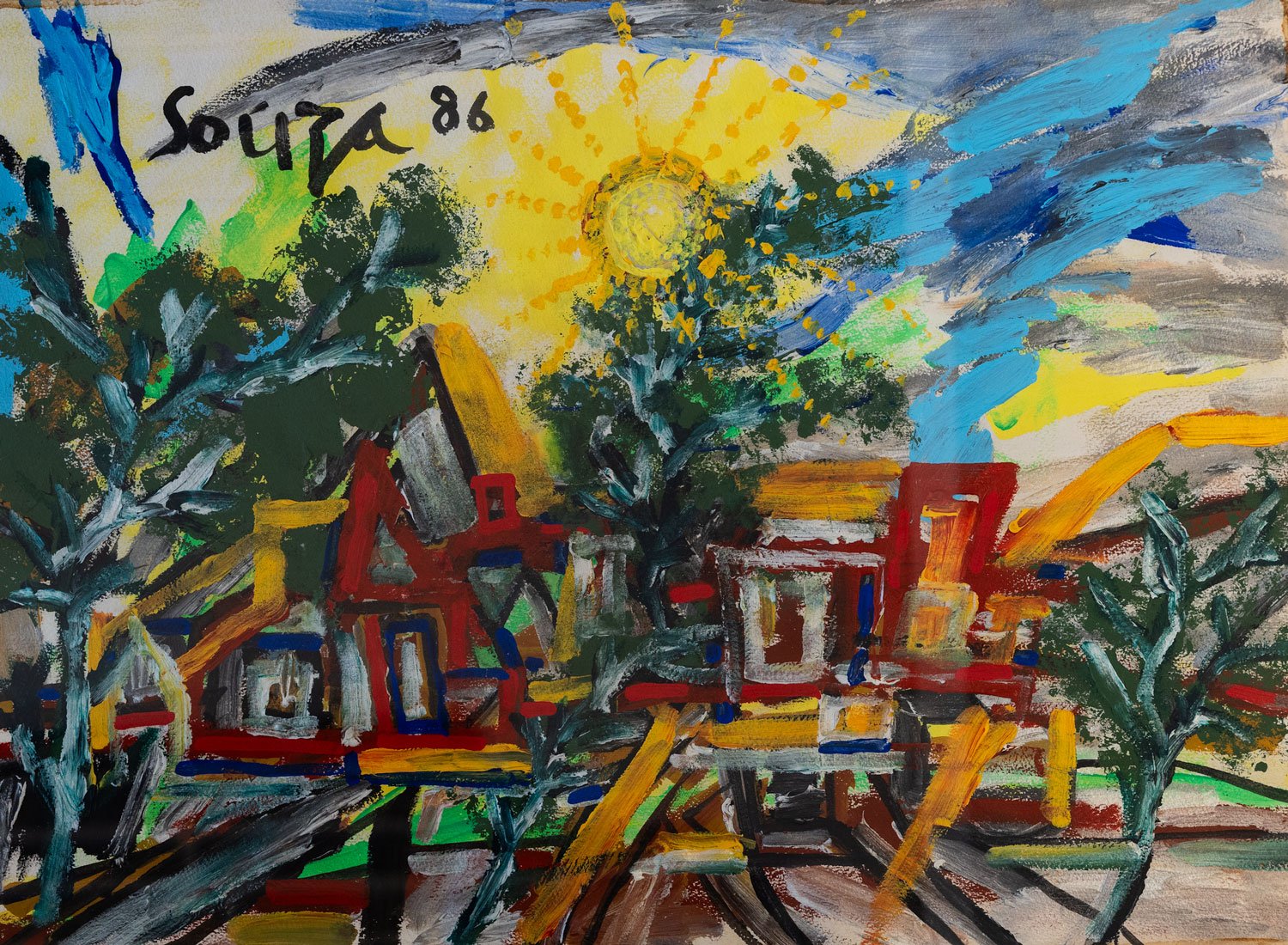
F. N. Souza
N. Souza (Francis Newton Souza, 12 April 1924 – 28 March 2002) was one of India’s most influential modern artists and a foundational figure in the nation’s post-independence art movement. Born in Saligão, Goa and raised in Bombay (now Mumbai), Souza’s early years were marked by rebellion and profound artistic curiosity, shaped by his Catholic upbringing, early adversity, and exposure to both Indian folk art and European traditions.
A co-founder of the Bombay Progressive Artists’ Group in 1947 alongside M. F. Husain, S. H. Raza, K. H. Ara, and others, Souza was pivotal in breaking from colonial and academic art conventions to forge a bold, international modernist idiom. His work is celebrated for its raw expressionism, visceral brushwork, and provocative engagement with subjects from the human figure and nudes to still lifes, landscapes, and Christian iconography—often rendered with intense emotion, distortion, and symbolic force.
Souza’s artistic journey took him from Bombay to London in 1949, where his painting and writing found early recognition; his solo show at Gallery One in 1955 and his autobiographical essays such as Nirvana of a Maggot marked his rise on the international stage. He lived and worked across Europe and later in New York, blending influences from Renaissance art, Cubism, and Expressionism with personal and cultural narratives.
Souza’s legacy is defined by his uncompromising individuality, his challenge to aesthetic and social norms, and his profound impact on modern Indian art. He has been featured in major museum exhibitions worldwide and was the only Indian artist included in the Tate Modern’s survey of 20th-century modernism.